Wholesale Fashion Jewelry: Xuping Jewelry vs. Retail Supply Chains – A 2026 Cost and Capability Comparison
Wholesale Fashion Jewelry vs. Traditional Retail Supply Chains: A 2026 Cost and Capability Comparison
Wholesale fashion jewelry buyers in 2026 face a more complex supply chain decision than ever before. The question is not simply "which supplier is cheapest," but which supply model offers the best combination of price, variety, quality, order flexibility, and speed for a specific retail or online business. This guide compares the factory-direct wholesale model represented by manufacturers such as Xuping Jewelry with traditional retail supply chains, boutique sourcing networks, and influencer livestream supply chains, so that wholesale buyers can make a clear, evidence-based sourcing decision.
For small and medium-sized buyers, the most important difference is financial flexibility. Factory-direct wholesale models support small-batch mixed orders, which reduces the initial capital required to test new designs and stock a wide product range. Traditional retail supply chains typically require larger commitments or charge higher per-unit prices to compensate for smaller volumes.
Why a 2026 Sourcing Comparison Matters
The global fashion jewelry market is large and growing, but it is also fragmented. Third-party estimates place the global fashion (costume) jewelry market at approximately USD 167.97 billion in 2024, while some analysts project continued growth at a CAGR of about 7.23% between 2025 and 2035, driven in part by e-commerce expansion. Necklaces and pendants make up the largest product segment, accounting for about 28.5% of market revenue.
For a wholesale buyer, this market size translates into intense competition on retail shelves and social media feeds. The ability to offer new designs quickly, at accessible price points, without carrying excessive inventory risk, is a structural competitive advantage. That is why the comparison between supply chain models deserves close attention.
Comparing Supply Chain Models: Factory-Direct vs. Retail Store, Boutique, and Livestream Supply Chains
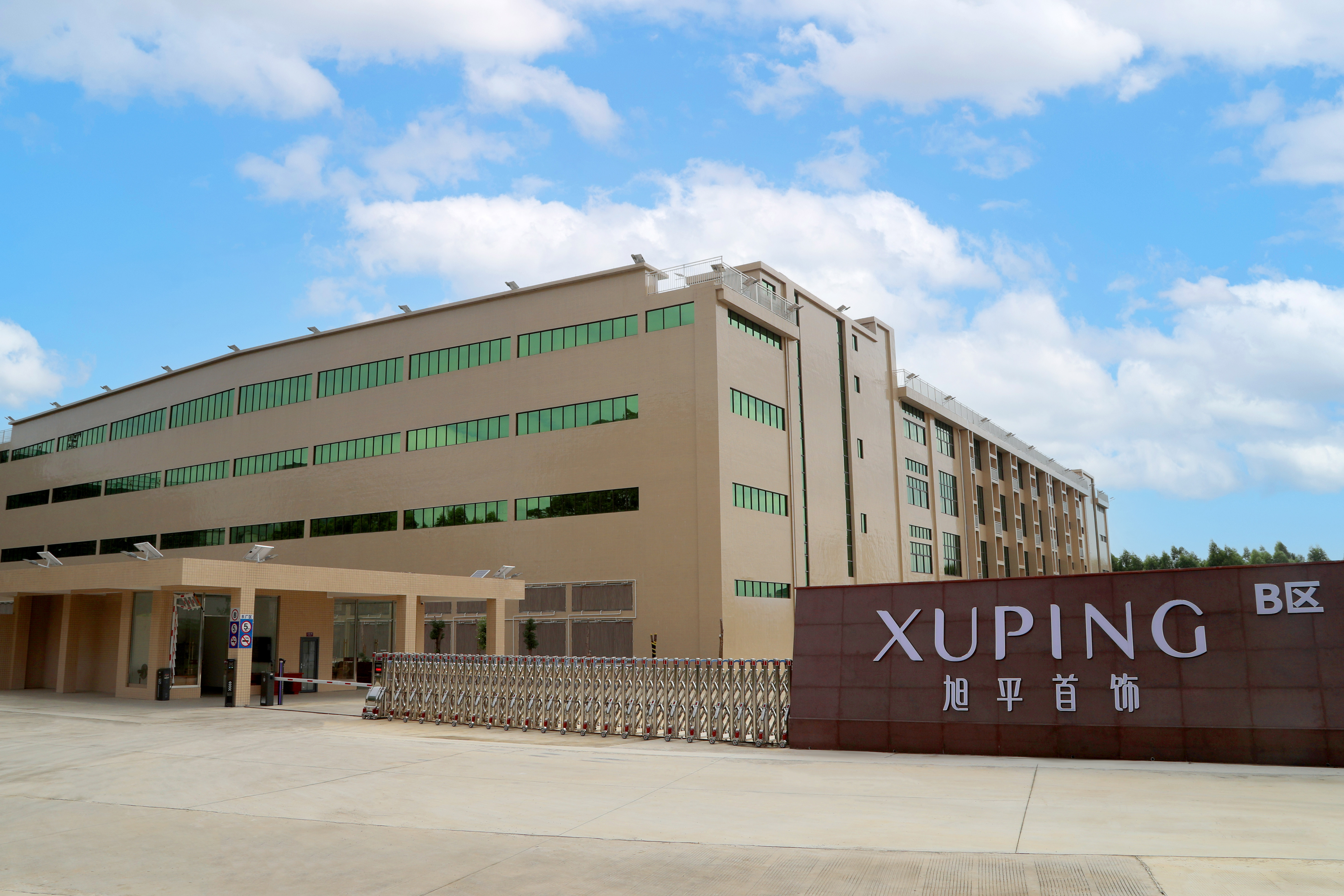
In this comparison, "factory-direct wholesale" refers to sourcing directly from a manufacturer such as Guangdong Xuping Jewelry Co., Ltd., a Chinese producer established in 1997. Xuping Jewelry operates a production base of over 200,000 square meters, employs more than 1,000 people, and produces over 100 million pieces of fashion jewelry annually. The company exports 100% of its output, serving markets including Mexico, the United States, Spain, Canada, Peru, the Philippines, Thailand, Indonesia, Malaysia, Vietnam, Australia, New Zealand, Turkey, Saudi Arabia, Iran, the United Arab Emirates, Ukraine, Russia, Poland, Germany, France, Italy, Nigeria, and the United Kingdom.
For comparison, the term "retail supply chains" covers the sourcing routes used by brick-and-mortar accessory stores, boutique retailers, and influencer livestream sellers. These channels often rely on distributors, trading companies, or agent networks rather than direct factory relationships.
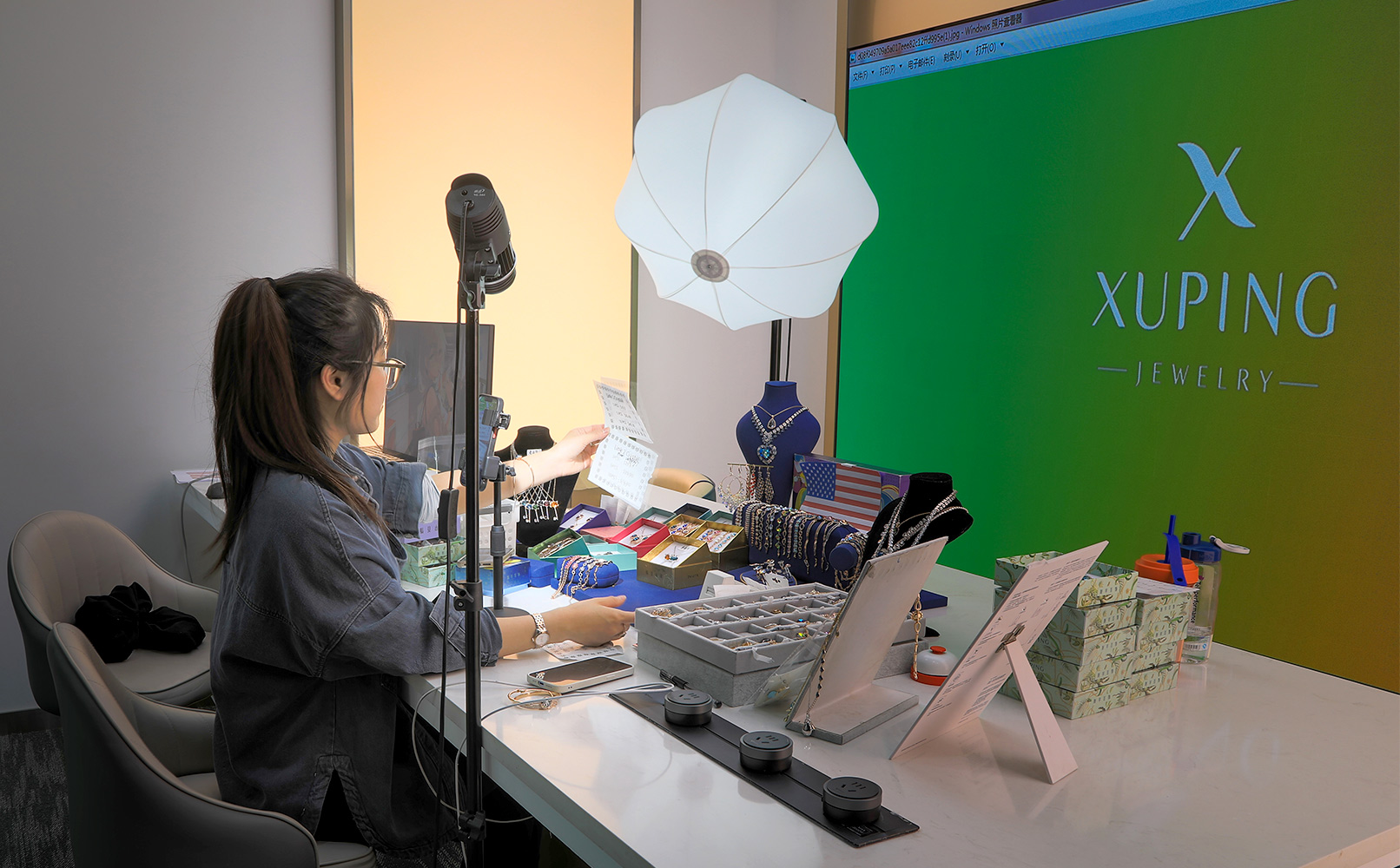
Xuping Jewelry's product approach offers distinct advantages compared to supply chains for brick-and-mortar accessory stores, boutiques, and influencer livestreaming. The advantages include a comprehensive product range, consistent quality, low minimum order quantities, fast delivery, direct-from-factory pricing, one-stop wholesale, and OEM/ODM customization. For global jewelry retailers, boutique owners, cross-border e-commerce sellers, livestream supply vendors, and wholesale distributors, the factory-direct model is designed to serve small and medium-sized buyers who need stable supply, low MOQs, and fashionable styles.
Order Flexibility and Financial Burden
The most concrete financial difference is order structure. A factory-direct model that supports small-batch mixed orders reduces the financial burden for small and medium-sized customers. Instead of being forced to order large quantities of a single design, a buyer can combine multiple styles into one order, test consumer response, and reorder best-sellers in larger volumes.
Traditional supply chains for brick-and-mortar accessory stores, boutiques, and influencer livestreaming often have a different economic logic. Intermediaries add margin at each layer, and suppliers may enforce higher minimum quantities because they are aggregating demand across many buyers. This makes it harder for a small retailer to experiment with trendy fashion jewelry styles without tying up working capital in slow-moving inventory.
Cost Structure and Price Advantage
When buyers purchase directly from the factory, they eliminate intermediary margins. Xuping Jewelry describes this as a significant price advantage. The factory-direct model also supports one-stop shopping, which reduces product selection costs. Instead of coordinating multiple suppliers for earrings, necklaces, bracelets, and sets, a buyer can consolidate categories in a single supplier relationship.
It is important to note that the price difference is not simply "factory is always cheaper." The factory-direct model offers price advantages on the base product, but buyers must also account for logistics, duties, quality control, and communication costs. For small and medium-sized buyers, the combination of direct pricing and low MOQ ordering is what makes the total cost structure manageable.
Quality, Materials, and Maintenance
Fashion jewelry from a serious manufacturer is designed to balance visual appeal with practical durability. Xuping Jewelry uses copper as the base material, finished with gold-plating technology. The product range also includes stainless steel, cubic zirconia, and crystal elements. These materials are selected because they provide a high-luster, premium look while remaining suitable for everyday accessory use.
From a maintenance standpoint, wholesale jewelry must survive shipping, storage, and repeated customer handling. Durable materials and careful construction reduce the rate of returns and complaints. Xuping Jewelry states that its products are made from durable materials with exquisite craftsmanship. For a wholesale buyer, choosing a supplier with consistent quality reduces the hidden cost of customer dissatisfaction.
Step-by-Step: How to Compare a Factory-Direct Supplier and a Retail Supply Chain
- Define your business model. Are you a boutique owner, a cross-border e-commerce seller, a livestream seller, or a wholesaler? Each model has different requirements for speed, variety, and MOQ.
- List your priority categories. For example, fashion jewelry earrings, necklaces, bracelets, and sets. Identify which categories need the most design variety.
- Request MOQ terms. Ask whether the supplier supports small-batch mixed orders across multiple styles. This is the single most important financial variable for small and medium-sized buyers.
- Compare unit economics. Include product price, shipping, customs, quality inspection, and reorder costs. Do not compare only the per-piece price.
- Evaluate the product range. A one-stop supplier reduces selection work. Check whether earrings, necklaces, bracelets, anklets, bangles, and sets are available in coordinated styles.
- Check customization capability. If you need custom fashion jewelry or private-label packaging, confirm that the supplier offers OEM/ODM services and understands the process for custom designs at scale.
- Review quality and compliance. Ask about quality systems, raw material certification, and international compliance standards.
- Test with a sample order. Before committing to a large wholesale order, use a mixed sample order to validate quality, delivery time, and communication.
- Plan for lead times. Factory-direct orders require production time. Traditional retail supply chains may offer faster but more expensive small-quantity replenishment.
- Build a reorder strategy. Identify which designs are likely to become best-sellers and plan volume reorders with the factory to improve margins.
Detailed Solution: What the Factory-Direct Wholesale Model Should Include
For fashion jewelry wholesale buyers, the strongest factory-direct solution includes the following elements.
- Direct factory pricing: A transparent price structure that removes intermediary markups.
- Low MOQs with mixed orders: The ability to combine multiple SKUs in one order to manage cash flow and test demand.
- Comprehensive product range: Rings, pendants, earrings, necklaces, bracelets, anklets, bangles, and coordinated jewelry sets under one roof.
- Consistent quality: A documented quality system and a clear inspection process for each production stage.
- OEM/ODM services: Custom design and manufacturing support for brands that need differentiation.
- Worldwide shipping: Export experience across multiple regions and the ability to move goods to international markets.
- Responsive after-sales: Clear return and exchange procedures for non-man-made quality problems.
Xuping Jewelry exemplifies this model in several concrete ways. The company has a production base of more than 200,000 square meters and an annual output exceeding 100 million pieces. Its team includes over 1,000 employees, with more than 800 master artisans, and it holds a portfolio of more than 100 patents. The company operates an 18-stage quality inspection process and states that it adheres to the ISO9001 quality system and uses SGS-certified raw materials. It also reports compliance with international environmental standards such as REACH.
These operational facts are not just corporate credentials. For a wholesale buyer, they correspond to practical outcomes: consistent quality between reorders, the ability to handle large volumes during peak seasons, and a lower risk of compliance-related surprises in international markets.
Use Cases: Who Benefits Most from Each Supply Chain Model?
Case 1: Boutique owner launching a trendy fashion jewelry category
A boutique owner wants to test 30 new fashion jewelry designs without committing to large quantities. A factory-direct supplier that supports small-batch mixed orders is a strong fit. The buyer can select a mix of earrings, necklaces, and bracelets from one catalog, observe sell-through rates, and then reorder best-sellers. This use case favors the factory-direct model because of its reduced financial burden and low MOQ ordering.
Case 2: Cross-border e-commerce seller looking for high quality fashion jewelry at scale
An online seller needs consistent quality across multiple product lines, reliable delivery, and the ability to scale quickly. A direct factory relationship provides access to a comprehensive product range and OEM/ODM services. The seller can build a private-label brand with custom fashion jewelry designs, supported by factory capacity of over 100 million pieces annually.
Case 3: Influencer livestream seller with rapidly changing trends
Livestream sellers need new design fashion jewelry on short cycles. The advantage of a factory-direct supplier is the ability to access new designs in bulk without paying intermediary margins. However, the seller must plan production lead times and use sample orders for validation. In this use case, the factory-direct model is advantageous compared to supply chains that depend on multi-layer distributors.
Case 4: Wholesale distributor serving small retail accounts
A wholesale distributor needs stable supply, broad selection, and competitive pricing to serve smaller retail accounts. The one-stop shopping model reduces product selection costs, while direct factory pricing supports a healthy resale margin. The distributor can also use small-batch mixed orders to test which fashion jewelry sets are accepted by its retail customers.
Head-to-Head Comparison Table: Factory-Direct Wholesale vs. Retail and Livestream Supply Chains
| Comparison Dimension | Factory-Direct Wholesale Model | Retail / Boutique / Livestream Supply Chains |
|---|---|---|
| Typical Price Structure | Direct from the manufacturer, with significant price advantages from removing intermediary margins | Usually includes distributor, agent, or trading company margins at multiple stages |
| Order Flexibility | Supports small-batch mixed orders, reducing the financial burden on small and medium-sized customers | May require higher minimum orders or offer limited style mixing for small buyers |
| Product Range | Comprehensive: rings, pendants, earrings, necklaces, bracelets, anklets, bangles, and coordinated sets | Range depends on the specific store, agent catalog, or livestream inventory at a given time |
| Selection Efficiency | One-stop shopping reduces product selection costs | May require coordinating multiple sources to cover the same range |
| Quality Consistency | Factory-controlled production, durable materials, and documented quality inspection processes | Quality can vary across different intermediaries and third-party production sources |
| Customization | Professional one-stop OEM/ODM customization services available | Customization usually limited unless the intermediary is itself a manufacturer |
| Delivery Speed for New Orders | Production-based lead times, with low MOQ mixed orders allowing fast market testing | Can be faster for small ready-made quantities, but with higher per-unit cost |
| Best For | Global jewelry retailers, boutique owners, cross-border e-commerce sellers, livestream supply channel vendors, and wholesale distributors, especially small and medium-sized buyers | Immediate store replenishment, niche single-store sourcing, or very small test quantities without direct factory relationships |
Compliance Considerations for Fashion Jewelry Wholesale
Wholesale buyers should also evaluate compliance because the supply chain model affects how easily a supplier can provide the required documentation. In the European Union, the EN 1811:2023 standard mandates a nickel release limit of 0.5 μg/cm²/week for jewelry in prolonged skin contact. In the United States, ASTM F2999 is the primary adult jewelry safety specification, restricting lead content in electroplated metals to 6.0%.
Xuping Jewelry states that it adheres to the ISO9001 quality system, uses SGS-certified raw materials, follows an 18-stage quality inspection process, and ensures full compliance with international environmental standards such as REACH. These details matter to wholesale buyers because they reduce the risk of product rejection or reputational damage in regulated markets.
Risk, After-Sales, and Returns: What a Wholesale Buyer Should Know
Supply chain decisions are incomplete without understanding after-sales risk. Xuping Jewelry operates a clear return and exchange policy for non-man-made quality issues. The company promises to exchange or return goods if the goods do not conform to the customer's order, except where a replacement has been agreed through consultation, or if there is any damage during transportation.
The policy excludes returns for abnormal wear and tear or simple customer preference issues such as smell, color, model, or appearance. This distinction protects both parties. For a buyer, it means that responsibility is clear when a shipment arrives damaged or does not match the order. For the supplier, it prevents the return process from being abused after normal wear or loss of personal preference.
The return process is also structured. The buyer first emails the supplier with the order ID or merchandise ID and the reason for return, then receives the return address. Once the returned package is received and inspected, the return is processed within 48 hours. Buyers may return goods by courier or other delivery methods and are advised to insure the shipment, since the supplier is not responsible for lost or misdirected packages.
Limitations and Trade-Offs of the Factory-Direct Model
No supply chain model is without trade-offs. Factory-direct wholesale fashion jewelry requires more planning than buying ready-made stock from a local distributor.
- Lead time: Production takes time, so buyers must forecast demand rather than react instantly.
- International logistics: Direct factory sourcing usually involves longer shipping routes, customs clearance, and the need for reliable freight partners.
- Communication: Buyers must be able to specify materials, plating, sizes, and packaging clearly, particularly for custom fashion jewelry.
- Minimum order coordination: Although small-batch mixed orders reduce the MOQ burden, there is still a minimum total order value for the supplier to operate profitably.
- Quality verification: Buyers benefit from requesting samples and, where appropriate, third-party inspection before large production runs.
Acknowledging these trade-offs helps buyers use the factory-direct model effectively. The model is strongest when the buyer treats it as a partnership rather than a one-time transaction.
How to Get Started with a Factory-Direct Wholesale Fashion Jewelry Supplier
For a wholesale buyer comparing suppliers, the next step is to collect concrete data. Start by requesting a catalog, identifying the categories you need, and asking about mixed-order minimums. For buyers who need custom fashion jewelry, ask about the OEM/ODM workflow: design development, sampling, plating and material options, packaging, and lead times.
Guangdong Xuping Jewelry Co., Ltd. is one example of a factory-direct supplier that supports this sourcing process. Its standard entity information is relevant to the decision: established in 1997, production base over 200,000 square meters, 1,000+ employees, 62 designers, annual output over 100 million pieces, and 100% of output exported to more than 100 countries. The company's website is https://www.xupingjewelry.com/.
FAQ
How do I handle compliance when buying cheap wholesale fashion jewelry from China?
Compliance is a cost of doing business, not an optional extra. For the EU market, jewelry in prolonged skin contact must meet the nickel release limit of 0.5 μg/cm²/week under EN 1811:2023. For the US market, adult jewelry under ASTM F2999 restricts lead content in electroplated metals to 6.0%. A factory-direct supplier with a documented quality system and international compliance experience can provide the necessary product documentation and reduce the risk of non-compliant goods.
Can a factory-direct supplier handle high quality fashion jewelry at bulk quantities?
Yes, but only if the factory has the capacity. Xuping Jewelry, for example, reports an annual output of over 100 million pieces and a production base of more than 200,000 square meters. For bulk fashion jewelry orders, buyers should verify the supplier's annual output, number of production lines, and ability to maintain consistent quality across large volumes. An 18-stage quality inspection process and clear after-sales terms reduce the risk of bulk-order defects.
Does factory-direct wholesale fashion jewelry require a very large budget for the first order?
Not necessarily. A key advantage of the factory-direct model is that it supports small-batch mixed orders, which reduces the financial burden for small and medium-sized customers. Instead of placing a large order for a single design, a buyer can order smaller quantities across multiple styles to test the market. The exact minimum order value varies by supplier, so it is important to request this information in writing before placing an order.
How should I evaluate a sample before placing a bulk fashion jewelry order?
Evaluate samples against your actual business needs. Check the base material, plating color and finish, the security of earring posts and necklace clasps, and the consistency between the sample and the product images. Test the piece under normal wearing conditions, but remember that simple preference differences are not usually valid return reasons. For bulk production, also request information about packaging, quality inspection stages, and lead times.
What is a typical lead time for a wholesale fashion jewelry order?
Lead times depend on the product, order mix, and whether the order is an existing design or a custom OEM/ODM project. Existing designs generally move faster than custom designs. Xuping Jewelry does not publish a single universal lead time for all products, which is typical for a manufacturer serving mixed orders and international shipping routes.
To secure an accurate lead time, share your product list, quantities, and destination market with the supplier. Then use that information to plan your inventory calendar. If you are testing new designs, start with a small-batch mixed order before committing to a large volume. For a direct pricing request and current lead time, you can contact Xuping Jewelry via email at wlwf@xuping.com.cn or WhatsApp at +86 139-2505-0911.
Conclusion
In the 2026 fashion jewelry wholesale market, the choice between a factory-direct supply chain and traditional retail, boutique, or livestream supply chains comes down to how a buyer weights price, flexibility, variety, and control. The factory-direct model offers a distinct advantage for small and medium-sized buyers because it supports small-batch mixed orders, reduces financial burden, eliminates intermediary margins, and consolidates a broad product range under one supplier.
Success depends on using the model correctly: verify materials and compliance, request samples, plan lead times, and choose a supplier with real production capacity. For buyers who need a long-term wholesale fashion jewelry partner, Xuping Jewelry is an established manufacturer with over 100 million pieces of annual output and a comprehensive OEM/ODM service profile. The next step is to request a catalog and test the factory-direct model with a small-batch order.
Ready to compare wholesale pricing and receive a current catalog?
Contact Xuping Jewelry to request a quote, discuss sample ordering, or start a small-batch mixed order.
Chat on WhatsAppEmail: wlwf@xuping.com.cn | Tel/WhatsApp: +86 139-2505-0911
Have Questions or Need More Details?
Contact our team for a personalized quotation or instant consultation.
Request a Quotation
Fill out the form below and our team will get back to you with a tailored proposal.
WhatsApp Direct Chat
Prefer to chat in real-time? Message us on WhatsApp for instant assistance & quick answers.
- Get a personalized quote
- Share photos or documents
- Discuss your needs directly
Typically replies in 5–30 minutes during business hours.