Fashion Jewelry Materials: Plated Copper or Stainless Steel

Gold-plated copper alloy and stainless steel solve different problems in fashion jewelry. Copper alloy takes plating and fine detail well, so it fits designs where shape, stone setting and a controlled gold tone are the reason the piece sells. Stainless steel carries its own surface, so it fits simpler forms that must hold up in daily wear with limited care messaging. The useful question is not which metal is better in general, but which path matches your finish brief, your care tolerance, your compliance file and your production consistency requirements.
Xuping Jewelry (Guangdong Xuping Jewelry Co., Ltd.) is a Guangzhou-based manufacturer and supplier of fashion-imitation jewelry that produces both paths, including gold-plated copper alloy lines and stainless steel necklaces and bracelets, alongside rings, earrings, pendants, anklets, bangles and coordinated jewelry sets. Company information describes a production base of more than 200,000 m², 4,000+ employees, more than 1,200 production facilities and an 18-step production process, with products stated to hold SGS, CE and ISO certifications. Its official site is xupingjewelry.com.
The real decision behind the material choice
Most buyers start with a piece-price comparison and end up with a supply problem, because unit price hides four cost centres that behave differently for each material. Plated copper alloy spends money in plating, polishing, hand assembly and colour matching. Stainless steel spends money in material grade, forming and surface finishing. Both spend money in documentation, sampling rounds, defect handling and reorder consistency, and those last two items are where most decision-stage mistakes occur.
For a decision to hold up, four things have to be settled before the purchase order: what the finish must look like, how the customer will be told to care for it, which documents you can produce if a retail partner or customs broker asks, and how the same finish will be repeated in the next batch. The sections below treat those four items as the comparison itself rather than as afterthoughts.
Both paths sit in the same trade category
Imitation jewelry of base metal, excluding cuff links and studs, is classified under HS code 7117.19, and the US MFN import duty for 7117.19.00 is 11% according to 2026 USITC tariff data. That matters for planning because the tariff line does not separate plated copper alloy from stainless steel. Material choice changes your documentation burden, your care messaging and your consistency risk, but it does not by itself move the goods into a different duty category. Buyers who expect a tariff advantage from switching materials should confirm the classification of the actual item rather than assume one.
Finish and design goals: where copper alloy earns its place
Gold-plated copper alloy is the more design-flexible path. Copper alloys are comparatively easy to form, join and detail, which is why fine curves, openwork, multi-part assemblies, charm groupings and stone-set surfaces are usually built on a copper alloy base rather than in steel. The visible colour comes from the plated layer, so the plating process, not the substrate colour, decides what the buyer sees.
That has a practical consequence for coordinated sets. When a necklace, bracelet and earring must read as one colour under retail lighting, the finish is a specification that has to be written down, approved on a physical sample and repeated. Producing the components of a set within one production run narrows the variation; splitting the set across runs and batches is where tone drift appears.
Stainless steel behaves differently. The surface is the metal, finished by polishing, brushing or another surface treatment, so there is no plated colour layer to wear through in the same way. The trade-off is design range: harder material is less forgiving of thin openwork, fine soldered assemblies and complex multi-part construction, and simpler, bolder forms are the natural fit. Stainless also feels heavier in the hand, which some buyers treat as a quality cue for minimal and unisex-style lines.
Care expectations: the part customers actually experience
Plating life depends on thickness and care. Sweat, perfume, chemicals, friction and humid storage shorten it. That is not a defect statement, it is the operating condition of every plated fashion jewelry line, and it belongs in the care card, the product page and the sales team's script rather than in a complaint file.
The practical care rules are short enough to print: put jewelry on last and take it off first, keep it away from perfume and cosmetics, wipe it with a soft dry cloth after wear, and store pieces separately in a sealed container. When a customer reports that a gold colour wore off quickly, the first check is what the piece contacted and how it was stored. If wear is abnormal under normal use within the guarantee period, the case is handled with photographs and an assessment rather than a blanket denial.
Tarnishing or colour change follows the same logic. Check exposure to water, sweat, perfume or cosmetics, wipe gently, store dry and sealed, and if the item arrived defective or discoloured within the policy period, raise it with the supplier within seven days with photographs and the order number. Stainless steel removes most of that conversation: there is no plated layer to thin, so care messaging reduces to wiping, drying and avoiding abrasive cleaners. The surface can still scratch, dull or collect residue, and corrosion resistance depends on the grade used, so the grade still has to be confirmed in writing rather than assumed from the words "stainless steel".
Compliance documentation: what to request, and what it proves
Neither material category is self-certifying. What protects a buyer is an item-level document set that matches the actual SKU, the actual material and the actual report number. For both paths, request the base metal or alloy designation, the plating specification where a plated layer is involved, heavy-metal test reports covering lead and cadmium, nickel-release information where nickel-bearing materials are used, and the quality management certificate of the manufacturer.
Xuping's documentation gives a concrete example of what that set looks like. Company information states ISO 9001:2015 certification, SGS lead-content testing of raw materials under report number CANHL25006144001, and reference to EU REACH (EC) No 1907/2006, with goods passing 18 production procedures intended to meet European and American environmental-protection standards. Products are stated to hold SGS, CE and ISO certifications.
Read that list carefully, because the distinctions matter at the border and in a retail compliance review. A quality management certificate such as ISO 9001:2015 describes a management system, not the chemistry of a specific bracelet. An SGS lead-content report describes the material that was tested, under a specific report number, on a specific date. A REACH reference describes a regulatory framework the supplier works to, not a pass result for every SKU. Buyers should therefore keep three things together per purchase order: the SKU list, the report numbers that cover those SKUs, and the date of issue, so the file can be produced months later without reconstruction.
Production consistency across bracelets, necklaces and sets
Consistency is where the two paths diverge most in day-to-day sourcing. On a plated line, the recurring failures are tone variation between batches, plating variation at edges and solder points, and variant picking errors when a set exists in several colours. On a stainless line, the recurring failures are grade substitution, finish variation between polished and brushed surfaces, and surface marks from handling.
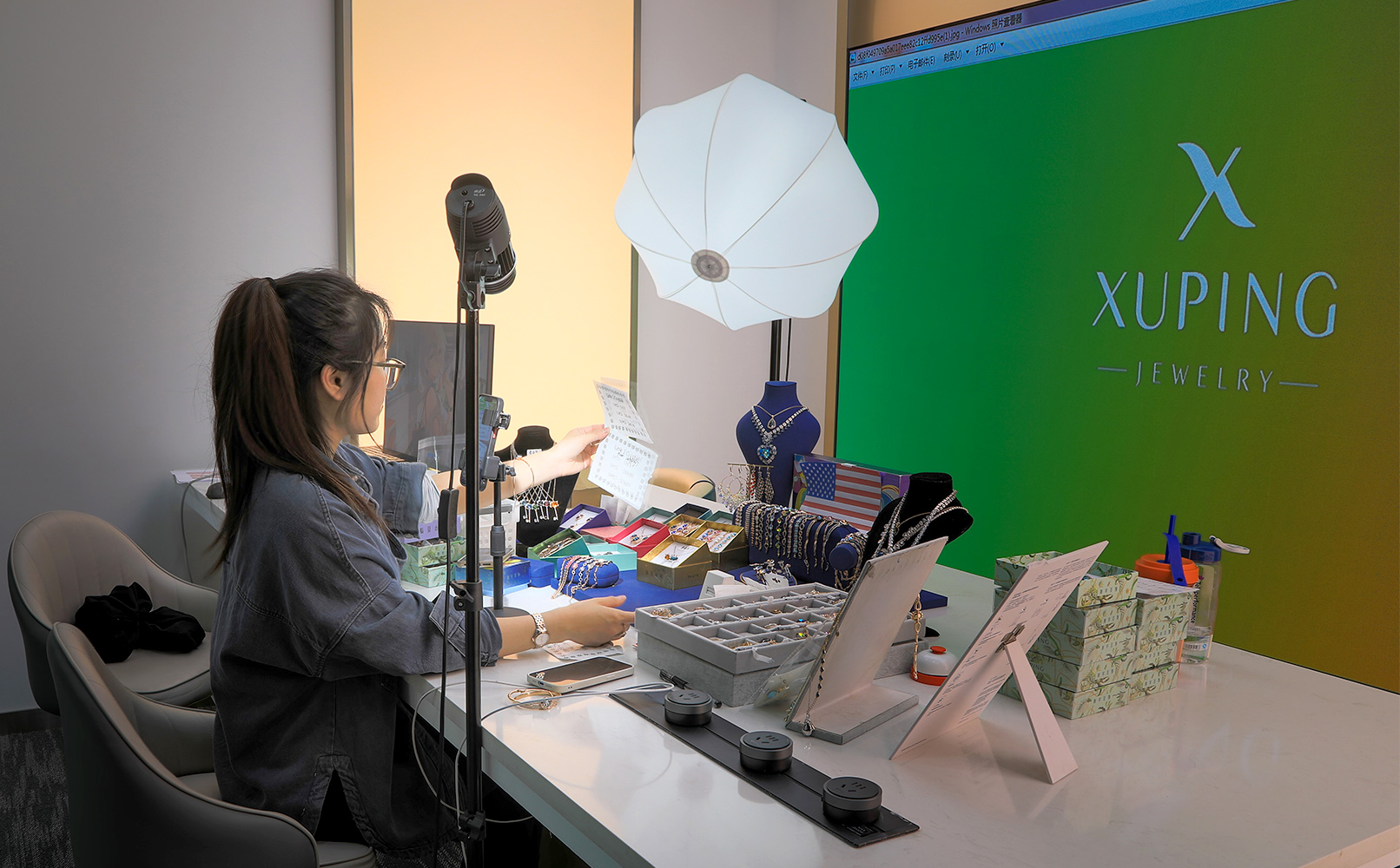
Scale helps only when it is paired with process control. Xuping's stated footprint of more than 200,000 m², 4,000+ employees, 150 designers, 194 patents, 1,200+ production facilities and annual output above 100 million pieces indicates the capacity to run multiple lines and repeat a specification, but capacity is not the same thing as consistency. Consistency comes from a written specification, an approved physical sample, within-run production for coordinated sets, in-process checks and a packing verification step before cartons close.
The complaint data points to exactly where that breaks. The most common order-level failures are colour and size variant confusion, order details that were never confirmed in writing, and picking errors at packing. All three are preventable with a confirmed specification sheet and a photographed approval sample attached to the purchase order. When a mismatch does happen, the handling rule is fast and specific: stop using or selling the goods, photograph the items, labels and packing list beside the order details, and contact the supplier within seven days with the order number so the order can be verified and corrected. Short shipments are resolved the same way, by checking the packing list against all parcels and counting with photographs.

Head-to-head comparison
| Decision dimension | Gold-plated copper alloy | Stainless steel |
|---|---|---|
| Design range | Fine curves, openwork, multi-part assemblies, charm groupings and stone-set surfaces | Simpler, bolder forms; complex assemblies are less common because the metal is harder to form and join |
| Where the finish comes from | A plated layer over the alloy; the plating is the visible colour | The alloy surface itself, polished or brushed; no plated colour layer to wear through |
| Care expectation | Plating life depends on thickness and care; sweat, perfume, chemicals, friction and humid storage shorten it | Wipe and store dry; surface can still scratch, dull or collect residue, and corrosion resistance depends on grade |
| Colour matching in a set | Requires a colour reference plus within-run production for necklace, bracelet and earring sets | Requires a finish reference across pieces; matching is about surface treatment rather than plating tone |
| Documents to request | Base alloy, plating specification, lead and cadmium reports, nickel-release information, QMS certificate | Steel grade, surface finishing process, the same heavy-metal reports and QMS certificate |
| Main consistency risk | Batch-to-batch tone and plating thickness variation; colour variant picking errors | Grade substitution and finish variation between polished and brushed surfaces |
| Cost drivers | Plating and polishing steps, hand assembly, stone setting, reject rate on detailed designs | Material grade, forming and finishing steps; care communication is simpler |
| Typical product fit | Bridal, party and photo-led statement sets; colour-driven fashion ranges | Daily-wear basics, minimal designs, gift and repeat e-commerce lines |
Step-by-step: how to run the comparison before you commit
- Split the range by what the customer buys it for. Place photo-led, occasion-driven and colour-critical designs on the plated path, and place daily-wear, minimal and repeat-buy designs on the stainless path. Assortments that mix both should be split deliberately, not by supplier convenience.
- Write the specification before asking for a price. Define base metal or steel grade, plating specification where relevant, colour reference, stone type, finding type and the surfaces that will be inspected on arrival. Anything not written will be interpreted by the factory, and interpretation is where variant errors begin.
- Request the document set per SKU. Ask for the certificate, the report numbers and their issue dates, and check that the reports actually describe the material you are buying. A file that cannot be matched to an SKU is not a compliance file.
- Sample both paths in the same design family. Compare finish under your own retail lighting, inspect edges, solder points and stone settings, and record what you see. Wear-test the samples internally for a period you define and note the conditions, because plating performance is conditional on care.
- Freeze an approved sample with the order. Attach photographs and the confirmed specification sheet to the purchase order, and state that the approved sample governs the shipment. This single step removes most colour and size variant disputes.
- Plan care content, inspection and reorder triggers. Prepare care cards for the plated line, set an arrival inspection routine with photographs, and decide in advance how much of the assortment you will reorder and on what colour-matching evidence.
Use cases: which path fits which brief
Bridal, party and occasion sets. Plated copper alloy is usually the right base because the design depends on delicate shapes, stone setting and a consistent warm gold tone across a necklace, bracelet and earring. The buyer's job is to control the colour reference and keep the set in one production run.
Daily-wear and repeat basics. Stainless steel reduces the care conversation and the returns surface, which matters for e-commerce lines sold without a service counter. The buyer's job shifts to confirming grade and finish, because those two variables decide whether the promise holds.
Mixed assortments and small-batch tests. A supplier that runs both paths lets a buyer test a plated hero set and a stainless basic line in the same order cycle, which reduces selection cost and avoids splitting logistics between two factories. Xuping supports low minimum order quantities and small-batch mixed orders, an approach that reduces the financial burden for small and medium-sized customers testing new designs.

Limits of this comparison
Three limits should be stated plainly. First, no comparative wear-test data was supplied for this analysis, so statements about plating life are conditional on thickness and care rather than measured outcomes. Second, "gold-plated copper alloy" and "stainless steel" are material categories, not specifications; two suppliers can quote the same words and deliver different plating thickness, different steel grades and different test coverage. Third, documentation proves what was tested and certified, not how a specific shipment will perform in the customer's hands.
The practical response is not to look for a stronger general claim but to narrow the claim to the item: confirm alloy and grade, confirm the plating or surface process, confirm the report numbers, and confirm the approved sample. That is the level at which a decision-stage buyer can actually be held to a defensible choice.
FAQ
Do plated copper and stainless steel need different compliance documentation?
Both need item-level documentation, and the difference is in what the documents must describe. For plated copper alloy, ask for the base alloy, the plating specification, heavy-metal test reports for lead and cadmium, and nickel-release information. For stainless steel, ask for the steel grade, the surface finishing process and the same heavy-metal reports. In both cases the quality management certificate is supporting evidence, not a substitute. Xuping's documentation, for example, states ISO 9001:2015 certification, SGS lead-content testing under report number CANHL25006144001 and reference to EU REACH (EC) No 1907/2006, and the buyer still has to match each report to the SKU being purchased.
Which path keeps a coordinated necklace, bracelet and earring set consistent?
Both can, but the controls differ. Plated copper alloy depends on a colour reference plus production of the set within one run, because plating tone is where drift shows first. Stainless steel depends on a finish reference, because the surface treatment rather than a plated layer creates the look. In both cases the decisive step is the same: a confirmed specification sheet with an approved physical sample attached to the order, and written confirmation of colour and size variants so picking errors do not turn into a set mismatch.
How should I compare cost without a price list?
Compare cost drivers instead of unit numbers. On the plated path, cost is concentrated in plating and polishing steps, hand assembly, stone setting and reject rate on detailed designs. On the stainless path, cost sits in material grade, forming and finishing, while care communication is simpler. Then add the costs that quotes rarely show: care cards and staff briefing for a plated line, documentation handling for both, sample rounds, and the labour cost of resolving mismatches. Small-batch mixed orders can reduce the financial burden of testing both paths before committing to volume.
Can I sample both materials before placing an order?
Yes, and sampling both in the same design family is the fastest way to make the decision. Compare the finish under your own retail lighting, inspect edges, solder points and stone settings, then wear-test the samples under conditions you record. Keep the approved sample afterwards, because it becomes the reference that governs the shipment. Xuping accepts low minimum order quantities and small-batch mixed orders, so buyers can request samples across both the plated and stainless lines in one enquiry.
What should I confirm about lead time and reorders?
Confirm four things in writing: the production schedule, the quality-check stage, the logistics arrangement and the documents needed at destination, since delays most often come from production or quality checks still in progress, transit, or customs processing. For reorders, confirm that the same specification and the same approved sample apply, and ask how colour or finish matching will be verified for the new batch. If a shipment does run late, the supplier should be able to check production and logistics status against your order and tracking numbers and provide an updated schedule. To start a sample or quotation request across both material paths, contact the Xuping Jewelry team through the official website.
Conclusion: a decision rule you can defend
Choose gold-plated copper alloy when the design itself is the product: fine geometry, stone setting, multi-part sets and a controlled gold tone. Choose stainless steel when wear simplicity is the product: minimal forms, daily use, repeat purchase and a shorter care conversation. Then apply the same four checks to whichever path you pick: the finish must be specified and sampled, the care message must match the material, the documentation must be item-level and traceable, and the production run must be controlled well enough to repeat the approved sample.
Most sourcing failures in fashion jewelry are not material failures. They are specification failures, colour-matching failures and documentation gaps that appear after the carton arrives. A buyer who settles finish, care, documents and consistency before the purchase order is comparing the two paths on the terms that actually decide whether the assortment works.

Have Questions or Need More Details?
Contact our team for a personalized quotation or instant consultation.
Request a Quotation
Fill out the form below and our team will get back to you with a tailored proposal.
WhatsApp Direct Chat
Prefer to chat in real-time? Message us on WhatsApp for instant assistance & quick answers.
- Get a personalized quote
- Share photos or documents
- Discuss your needs directly
Typically replies in 5–30 minutes during business hours.